
Opinion
Henry Anochiri: Service, continuity, and development: Assessing Akarachi Amadi’s representation in Mbaitoli/Ikeduru

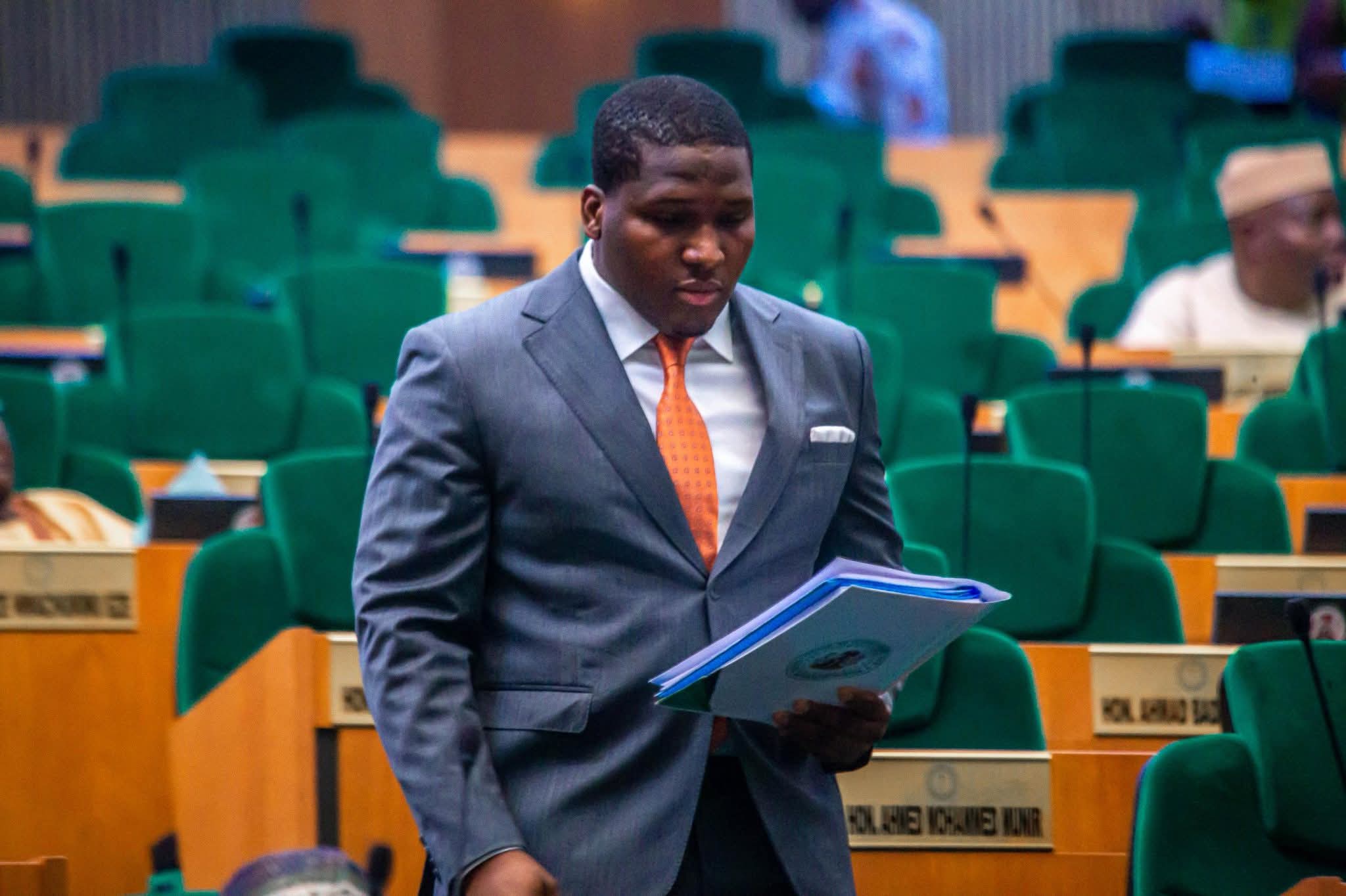

In Nigeria’s evolving democratic landscape, public trust in governance is increasingly shaped not by political rhetoric but by measurable outcomes. Within this context, the representation of RT. Hon. Akarachi Amadi in Mbaitoli/Ikeduru Federal Constituency offers a useful case study on how service-driven leadership can translate into tangible development at the grassroots.
One of the most visible aspects of his tenure has been the prioritisation of basic human needs, particularly healthcare. The recently concluded Akarachi Free Medical Outreach, which covered all five zones of the constituency, addressed a critical gap in access to primary healthcare. In rural and semi-urban communities where public health infrastructure is often limited, such interventions function as short-term relief mechanisms while simultaneously drawing attention to systemic healthcare deficits.
However, the outreach is best understood not as an isolated initiative, but as part of a broader development pattern. Education infrastructure, for instance, has received sustained attention. The construction and renovation of primary and secondary schools reflect an understanding that human capital development begins with learning environments that are safe, functional, and accessible. In a constituency with a youthful population, this focus aligns with long-term socio-economic planning rather than short-term political gain.
Health sector interventions follow a similar logic. The building and rehabilitation of health centres strengthen decentralised healthcare delivery and reduce dependency on urban facilities. When analysed through a development lens, such investments help lower household healthcare costs, improve health-seeking behaviour, and enhance productivity—outcomes that extend well beyond immediate medical care.
Infrastructure development has also played a strategic role. The grading and rehabilitation of roads across communities have improved connectivity, eased the movement of goods and people, and expanded local economic opportunities. In rural development theory, road access is often a catalyst for growth, enabling farmers, traders, and students to participate more fully in regional economies.
Complementing these efforts are solar-powered boreholes, which address water access and public health simultaneously, and the construction and renovation of town halls, reinforcing local governance structures and civic participation. Support for churches and faith-based institutions further reflects a pragmatic recognition of their stabilising influence within community systems.
Beyond physical infrastructure, RT. Hon. Amadi’s interventions extend into education financing and social mobility. Support for students through JAMB sponsorship, facilitation of university admissions, and education funding tackles one of the most persistent barriers to upward mobility: the cost of access. In a country where educational inequality often mirrors income inequality, such interventions have multiplier effects on households and communities.
Employment facilitation represents another critical dimension. By securing federal job placements for qualified constituents, his office has helped integrate local talent into national institutions. This approach addresses not only unemployment but also the sense of political exclusion felt in many constituencies. When combined with skills acquisition programmes, empowerment initiatives, and targeted economic support—often described as “stomach infrastructure”—these efforts balance immediate welfare needs with longer-term capacity building.
Analytically, what distinguishes this representation is the integration of social intervention with physical infrastructure and human capital development. Rather than relying on singular, headline-driven projects, the approach reflects a layered development strategy—health, education, mobility, employment, and community cohesion working in tandem.
As discussions around continuity naturally emerge, the broader policy question becomes one of development sustainability. Infrastructure requires maintenance, education investments yield returns over time, and institutional trust deepens through consistency. Disruptions in representation often interrupt these cycles, leaving projects incomplete and momentum stalled.
Mbaitoli/Ikeduru’s experience suggests that when leadership is anchored on service, responsiveness, and inclusion, representative governance can move beyond symbolism to substance. The real measure of such leadership lies not only in what has been delivered, but in whether existing gains are allowed to mature into long-term outcomes.
In this regard, RT. Hon. Akarachi Amadi’s tenure presents an instructive example of how people-centred governance, when sustained, can redefine representation at the grassroots level.

Written by Dr Henry Chima Anochiri, IPAM, the Director General Mandate For Representative Democracy.

-

 Politics1 year ago
‘Bishop Onuoha, Iyke Nwoke luring ADC members into signing a document to suspend Abia chairman’-Okwara Agwu
-

 Politics1 year ago
Ex-State Assembly aspirant, Okoh, APC executive members join ADC in Abia
-

 Politics1 year ago
2027: Southeast chieftain, Daniel Ifeanyi Okorie dumps PRP for ADC in Abia
-

 Politics1 year ago
Abia ADC announces LG chairpersons for membership registration pending harmonization
-

 Politics1 year ago
Abia ADC disciplinary committee summons national welfare secretary, Ukandu over alleged misconducts
-

 News1 year ago
Ex-presidential aspirant, Onwusoanya Ezendigbo calls for legislations banning children of public office-holders to seek education, healthcare aboard
-

 Politics11 months ago
Abia chieftain, Emeka Bahadur tasks ADC members on grassroots mobilization
-

 Politics11 months ago
Stalwart, Emeka Bahadur welcomes ADC NWC to Abia on One-day leadership summit