
Opinion
When Reforms Becomes Burden: Fuel Subsidy Removal And The Nigerian Citizen

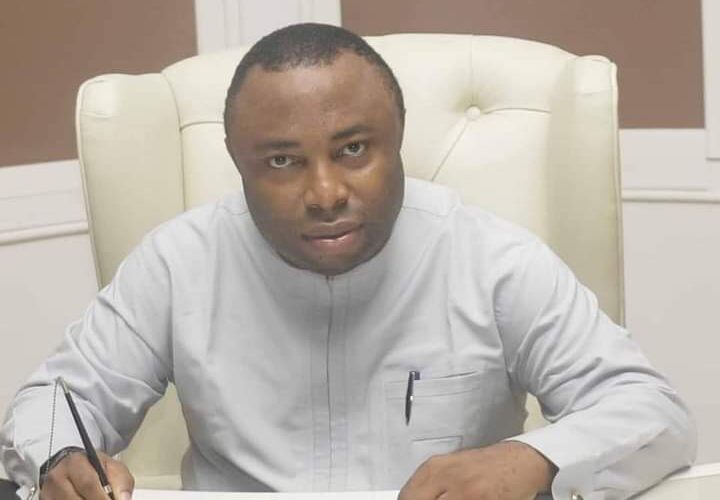

By Chinenye Nwaogu

The removal of fuel subsidy in Nigeria has been framed by policymakers as a necessary correction—an overdue step toward fiscal discipline, market efficiency, and the elimination of entrenched corruption. On paper, the argument appears rational: for years, Nigeria spent enormous public resources subsidizing petrol consumption, often to the benefit of smugglers, middlemen, and opaque import arrangements rather than ordinary citizens. Estimates from the Nigerian government placed subsidy expenditure at over ₦4 trillion in 2022 alone, with projections suggesting similar or higher figures if the policy had continued. In a country grappling with mounting debt, limited revenue, and infrastructure deficits, such spending was widely described as unsustainable. Yet, beyond the fiscal arithmetic lies a deeper question of political economy: what exactly did subsidy removal take away, and what has replaced it for the average Nigerian?

For millions of Nigerians, the fuel subsidy—however inefficient and distortionary in theory—represented the most tangible, everyday benefit they received from the state. In a system where public services such as electricity, healthcare, public transportation, and social welfare remain weak or inaccessible, subsidized petrol functioned as a de facto social safety net. It lowered transportation costs, stabilized food prices, and indirectly supported informal economic activity, which employs over 80% of the workforce. Removing it without a credible, immediate, and visible alternative has effectively withdrawn the only consistent economic buffer available to the majority.
Fuel in Nigeria is not merely a commodity; it is the backbone of the entire economic system. Due to unreliable electricity supply—where national grid output often fluctuates between 3,000 and 5,000 megawatts for a population exceeding 200 million—diesel and petrol power homes, businesses, hospitals, and schools. Transportation systems rely almost entirely on road networks fueled by petrol and diesel. Agriculture, processing, logistics, and retail distribution are all energy-dependent in a highly inflation-sensitive economy. When fuel prices rise sharply—as they did following subsidy removal, with petrol prices increasing from around ₦185 per litre to over ₦1200–₦1500 per litre in many regions—the effect cascades across every sector. Food inflation, already above 25% before the policy shift, accelerated further, pushing basic staples beyond the reach of low-income households. Transport fares doubled or tripled in many urban centres. The real income of wage earners and informal workers collapsed in the face of stagnant earnings and rising costs.
In this context, subsidy removal operates not merely as a fiscal reform but as a massive, implicit tax on the population. Unlike progressive taxation, however, this burden is regressive: it disproportionately affects those on the lower end of the income distribution, who spend a larger share of their income on transportation and basic goods. The absence of effective cushioning mechanisms has amplified this impact. While the government announced palliative measures—cash transfers, food distribution, and temporary wage adjustments—the scale, coordination, and transparency of these interventions have been widely questioned. Reports of delayed implementation, limited coverage, and politicization at state and local levels have undermined their effectiveness. For many Nigerians, the promised relief has remained abstract, while the price increases are immediate and relentless.
A central justification for subsidy removal has been the claim that it eliminates corruption embedded in the subsidy regime. Historically, this claim is not without merit. Investigations, including those following the 2012 fuel subsidy scandal, revealed widespread fraud involving inflated import claims, phantom shipments, and collusion between private operators and public officials. The subsidy system, in that sense, became a conduit for rent-seeking and fiscal leakage. However, removing a corrupt program does not automatically eliminate corruption; it merely shifts the locus of control over the resources involved. The critical question, therefore, is whether the funds saved from subsidy removal are being managed in a manner that produces greater public value.
Current fiscal arrangements suggest that a significant portion of the savings is redistributed through the Federation Account Allocation Committee (FAAC) to federal, state, and local governments. While this aligns with Nigeria’s constitutional revenue-sharing framework, it raises concerns about accountability and impact. Subnational governments in Nigeria have long faced scrutiny over weak fiscal transparency, limited service delivery, and high recurrent expenditure. In many states, a substantial share of allocations is absorbed by salaries, overheads, and political patronage, with limited investment in infrastructure or social services. Local governments, which are theoretically closest to the people, often operate under the effective control of state governments, further diluting accountability.
In this context, the argument that subsidy removal has simply replaced one form of corruption with another gains traction. Instead of opaque subsidy payments to importers, the funds now flow into a broader public finance system that lacks robust mechanisms to ensure that resources translate into improved living conditions for citizens. The result is a perception—and increasingly, a reality—of “recycled corruption”: public money continues to be expended without corresponding improvements in welfare, only through different institutional channels.
Comparative analysis further complicates the narrative that subsidy removal is inherently progressive or necessary. Many high-income countries maintain targeted subsidies or support mechanisms for essential goods and services, particularly those that affect the cost of living for lower-income households. These may take the form of energy price caps, transport subsidies, agricultural support, or direct income transfers. The key difference lies not in the existence of subsidies per se, but in their design, targeting, and governance. In environments with strong institutions, subsidies can be structured to minimize leakage and maximize social impact. In weaker institutional contexts, the challenge is not merely whether to subsidize, but how to do so effectively.
From a policy standpoint, the Nigerian government faced a choice not simply between “subsidy” and “no subsidy,” but between a poorly governed subsidy regime and a reformed, transparent, and targeted system of social support. By opting for abrupt removal without sufficiently robust replacement mechanisms, the state has effectively transferred the adjustment burden onto citizens. The macroeconomic benefits—reduced fiscal pressure, improved foreign exchange management, and potential long-term efficiency gains—remain largely prospective and unevenly distributed, while the microeconomic costs are immediate and widespread.
A more balanced approach would have involved a phased reform strategy: tightening oversight of subsidy claims, eliminating fraudulent actors, and gradually transitioning toward targeted support for the most vulnerable. Simultaneously, investments in public transportation, energy infrastructure, and social protection systems could have reduced the economy’s dependence on petrol and mitigated the inflationary impact of price adjustments. Transparency in the use of savings—through ring-fenced funds dedicated to health, education, and infrastructure—would have strengthened public trust and demonstrated tangible benefits.
Ultimately, the legitimacy of any economic reform rests not only on its theoretical soundness but on its lived impact. In Nigeria’s case, fuel subsidy removal has exposed a deeper structural problem: the absence of a credible social contract between the state and its citizens. When the only widely felt benefit of government action is withdrawn without a clear and effective replacement, reform begins to resemble abandonment. The challenge is not simply to balance budgets, but to ensure that public resources—whether spent or saved—translate into real improvements in the daily lives of Nigerians. Until that connection is firmly established, policies like subsidy removal will continue to be seen not as necessary corrections, but as burdens imposed on a population already carrying more than its share.
-
 Politics1 year ago
‘Bishop Onuoha, Iyke Nwoke luring ADC members into signing a document to suspend Abia chairman’-Okwara Agwu
-

 Politics1 year ago
Ex-State Assembly aspirant, Okoh, APC executive members join ADC in Abia
-

 Politics12 months ago
2027: Southeast chieftain, Daniel Ifeanyi Okorie dumps PRP for ADC in Abia
-

 Politics12 months ago
Abia ADC announces LG chairpersons for membership registration pending harmonization
-

 Politics11 months ago
Abia ADC disciplinary committee summons national welfare secretary, Ukandu over alleged misconducts
-

 News1 year ago
Ex-presidential aspirant, Onwusoanya Ezendigbo calls for legislations banning children of public office-holders to seek education, healthcare aboard
-

 Politics10 months ago
Abia chieftain, Emeka Bahadur tasks ADC members on grassroots mobilization
-

 Politics9 months ago
Stalwart, Emeka Bahadur welcomes ADC NWC to Abia on One-day leadership summit