Opinion
Change in Anambra Central Senatorial District Is A Thing of Necessity


By Ike O.N Ike
“When a people can no longer point to the footprints of development in their communities, they have every right to question the value of the mandate they gave. Leadership is not measured by the seat occupied, but by the lives transformed, the roads connected, the opportunities created, and the hope restored. A mandate without measurable impact is a trust that demands an answer.”- IKE O.N. IKE

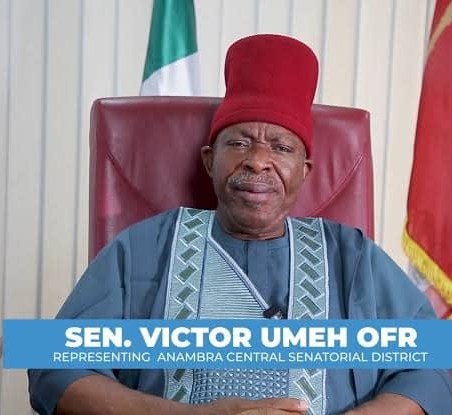
Anambra Central Senatorial District cannot continue to dwell in starvation and setback in development at a time when other senatorial districts are moving forward. There comes a time in the life of every people when silence ceases to be patience and becomes complicity, when political loyalty must give way to conscience, and when citizens must stop asking merely what their representatives have said and begin asking what they have actually delivered. That time has come for Anambra Central. Since 2023, the people of Anambra Central have entrusted a mandate to the Red Chamber with the legitimate expectation that their representative would use the office to attract Federal Government interventions, influence development programmes, pursue infrastructure, create opportunities and bring the presence of government closer to the people. After all the years, promises, opportunities and responsibilities associated with that office, the people are entitled to ask a simple but profound question: *what tangible transformation can the ordinary people of Anambra Central point to and call the dividend of their representation?
This is not a question of political party, personal hatred or who likes or dislikes the Senator. It is a question of public trust and stewardship. A Senator does not own the mandate he receives; he is a custodian of it. He does not personally own the opportunities that come with the office; he is entrusted with those opportunities on behalf of the people. When public opportunities pass through an elected representative while the people represented remain unable to identify meaningful development, the people have a moral right to ask what happened to their mandate, where the projects are, where the interventions are and where the transformational footprints of representation can be found. Public office is not a private inheritance, and political representation is not an entitlement to occupy a seat without producing measurable results.
The contrast with other senatorial districts makes the situation even more difficult to ignore. Across Nigeria, there are Senators who can point their constituents to multiple roads constructed or substantially facilitated through their interventions, together with schools, healthcare facilities, water projects, agricultural programmes, youth empowerment initiatives and other visible transformational projects spread across the different Local Government Areas they represent. Their people may debate the quality or quantity of those projects, but they can physically identify them, use them and connect them to the work of their representatives. In those districts, representation has left visible footprints across Local Government Areas. Roads have improved connectivity; schools and health facilities have received attention; water projects have reached communities; young people have benefited from empowerment initiatives; and other Federal Government interventions have provided tangible evidence that their representatives are actively pursuing the development needs of their people. This is the standard against which Anambra Central should be measured.
When that same standard is applied to Awka North Local Government Area, the absence of a comparable major and transformational intervention becomes a matter that can no longer be treated as ordinary political criticism. The people of Awka North have struggled to identify even one major road constructed or substantially facilitated through their Senatorial representation since 2023 that has transformed the lives of their people. They are entitled to ask why other Senators can point to multiple roads and visible transformational projects across the Local Government Areas they represent, while Awka North struggles to identify a single major project of comparable impact. They are entitled to ask where the roads are, where the major school interventions are, where the health facilities are, where the water projects are, where the agricultural interventions are, where the youth empowerment programmes are and where the major economic opportunities are that can make an ordinary citizen say with confidence that this is the dividend of our representation in the Senate. This is not an unreasonable demand; it is the legitimate expectation of citizens whose mandate is being exercised in their name.
The matter becomes even more serious because there has never been a period since the current Senator assumed office in 2023 when the people were publicly told that a lack of government funding was the reason for failing to pursue the promises made to them, particularly in Awka North. If funding was unavailable, let the records demonstrate it. If projects were proposed but rejected, let the relevant documents show it. If appropriations were made but funds were not released, let the records be produced. If projects were approved but Federal Government agencies failed to implement them, let those agencies be identified. But if resources and opportunities were available and meaningful interventions still failed to reach the people, then the people deserve to know why. Accountability is not an act of hostility; it is a fundamental obligation in a democracy.
This question becomes even more relevant in light of the statement made by former Senator Ishaku Elisha Abbo on July 15, 2026*, when he publicly claimed that serving Nigerian Senators now receive more than *₦2 billion annually for constituency projects, compared with approximately ₦220 million during his own tenure. The ₦2 billion figure should, of course, be independently verified against official appropriation and budget records rather than treated as an established fact. Nevertheless, the claim raises a legitimate public-interest question: *what resources are actually available for constituency development, and what measurable benefit has Anambra Central received from them? If the actual figure is lower, let the official figure be published. If it is higher, let the public know. Whatever the amount, the principle remains unchanged: where public resources are allocated for constituency development, citizens have a right to know what was appropriated, what was released, where it was directed, who implemented it, what was completed and what impact it had on the people.
The answer to that question should not be buried in political speeches, press releases or ceremonial photographs. It should be visible in the Local Government Areas themselves. It should be seen on roads, in schools, in healthcare facilities, in water projects, in agricultural interventions, in youth empowerment programmes and in other projects that improve the daily lives of ordinary citizens. Roads are not speeches, schools are not photographs, hospitals are not press releases, water is not a political slogan, and empowerment is not merely a campaign promise. Development must ultimately become visible, usable and measurable. If the achievements are there, there should be no difficulty presenting them to the people. If they are not there, then the people have every legitimate reason to demand an explanation and consider whether they deserve a different standard of representation.
This is not a demand that one Senator personally construct every road or solve every problem in Anambra Central. That would be unreasonable. The responsibility of a Senator is instead to use the influence, access, legislative platform and constitutional responsibilities of the office to aggressively pursue the development needs of the people. A Senator can identify priorities, lobby ministries and agencies, influence appropriations, sponsor interventions, exercise oversight, monitor implementation and demand answers when projects are delayed or neglected. A Senator can bring the plight of neglected areas to the national table and continue pressing until appropriate interventions are secured. That is the essence of purposeful representation. The people are not asking for miracles; they are asking for evidence that the mandate entrusted to their representative is being converted into measurable benefits for the people they represent.
Nowhere is that moral responsibility more urgent than in Awka North Local Government Area, where the most pressing development challenge confronting the people today is the poor state of the connectivity road network. Awka North is blessed with enormous agricultural, economic and human potential, yet much of that potential remains constrained because its Local Government communities are not adequately connected by functional and accessible roads. Farmers struggle to move their agricultural produce to markets; residents face difficulties accessing neighbouring towns and essential services; businesses and economic activities are affected by poor connectivity; and the movement of people and goods remains unnecessarily difficult. A functioning road network is not a luxury for Awka North; it is the foundation upon which agriculture, commerce, education, healthcare and local economic development can thrive. This is precisely why the absence of a major, visible and transformational road intervention in Awka North through effective Senatorial representation is so troubling. At a time when other Senators can point to roads and other significant infrastructure projects facilitated across the Local Government Areas they represent, the people of Awka North continue to grapple with a connectivity problem that directly affects their daily lives and economic survival. This is not merely an infrastructure issue; it is a question of whether the most urgent need of the people has been adequately carried to the Red Chamber and pursued with the seriousness it deserves. The people of Awka North are therefore justified in asking why, despite the opportunities associated with Federal representation, their most fundamental connectivity challenge remains largely unresolved.
Based on the backwardness our people have witnessed in the hands of the current representation of Anambra Central Senatorial District, the situation calls for an urgent change in representation. The people deserve the opportunity to have someone who genuinely understands their plight, appreciates their daily challenges and is prepared to use the office to pursue the development they have long been denied. Anambra Central cannot continue to remain spectators, watching other senatorial districts develop, attract projects and take their Local Government Areas into the light while our own people continue to wait on the margins. We cannot continue watching other districts take their people forward while Anambra Central struggles to point to comparable transformational achievements. The time has come for the people to demand representation that understands their reality, listens to their concerns and is prepared to translate their mandate into visible development.
The same scrutiny must apply to Awka South and every other Local Government Area within Anambra Central.* Every Local Government Area has the right to ask what its representation has done for it, not merely what was promised, announced or photographed. The relevant question is what was actually delivered. This is the standard that should guide the 2027 political conversation: not party sentiment, personal loyalty, political intimidation or empty propaganda, but evidence. Elections are not merely opportunities to choose who occupies an office; they are also opportunities for citizens to review the stewardship of those who have occupied that office. When citizens examine the record and conclude that representation has fallen below their expectations, they have every democratic right to demand a new direction.
There is nothing immoral about changing a representative whose performance has failed to meet the expectations of the people. What is more troubling is asking citizens to remain silent when their Local Government Areas are crying for development, teaching them to celebrate political presence while ignoring developmental absence, or asking them to defend a record that they cannot see for themselves. Anambra Central must stop measuring representation by political noise and begin measuring it by tangible results. Let the records be examined, let the performance be compared with what is happening in other senatorial districts, let the available evidence be placed before the people, and let the people make their judgment without fear or favour.
Ultimately, the office belongs to the people, the mandate belongs to the people, and the resources associated with the office are public resources. The Senator is a temporary custodian of a public trust. That trust carries a moral obligation to the Local Government Areas that entrusted it to him. Anambra Central therefore deserves representation that can point to roads, schools, healthcare facilities, water projects, youth empowerment, economic opportunities and other meaningful interventions across its Local Government Areas. That is not too much to ask. It is the minimum standard that citizens should expect from democratic representation.
The people of Anambra Central should therefore approach the 2027 election with a clear understanding that political loyalty cannot permanently substitute for performance. The standard must be no politics without performance, no promises without evidence, no representation without accountability, and no excuses without answers. Truth must define our conscience, not politicking. The district cannot continue celebrating the achievements of other senatorial districts while wondering why its own Local Government Areas are being left behind. The time has come to examine the record honestly, ask the difficult questions and demand a higher standard of representation.
A political mandate is not a personal entitlement; it is a solemn responsibility to the people. If that responsibility has been adequately discharged, let the evidence speak. If it has not, then the people must have the courage to demand change through the democratic process. Anambra Central deserves answers. Anambra Central deserves accountability. Anambra Central deserves development. Awka North deserves to point to projects. Awka South deserves to point to projects. Every Local Government Area in Anambra Central deserves to feel the impact of federal representation.
Above all, the people deserve a representation whose achievements do not have to be explained before they can be seen. They deserve to look around their Local Government Areas and recognize the tangible footprints of the mandate they entrusted to their representative. That is the true meaning of representation, and that is the standard Anambra Central must demand.
Mr. Ike O.N. Ike, a political affairs analyst, writes from Anambra State, Nigeria.
-
 Politics1 year ago
‘Bishop Onuoha, Iyke Nwoke luring ADC members into signing a document to suspend Abia chairman’-Okwara Agwu
-

 Politics1 year ago
Ex-State Assembly aspirant, Okoh, APC executive members join ADC in Abia
-

 Politics1 year ago
2027: Southeast chieftain, Daniel Ifeanyi Okorie dumps PRP for ADC in Abia
-

 Politics1 year ago
Abia ADC announces LG chairpersons for membership registration pending harmonization
-

 Politics1 year ago
Abia ADC disciplinary committee summons national welfare secretary, Ukandu over alleged misconducts
-

 News1 year ago
Ex-presidential aspirant, Onwusoanya Ezendigbo calls for legislations banning children of public office-holders to seek education, healthcare aboard
-

 Politics11 months ago
Abia chieftain, Emeka Bahadur tasks ADC members on grassroots mobilization
-

 Politics11 months ago
Stalwart, Emeka Bahadur welcomes ADC NWC to Abia on One-day leadership summit