Opinion
Abia ‘s Subpar Vat Performance And The Unconvincing Excuses By The Government: A pitable Reqiem/Epitaph To Governance Style Of Mr Governor And His Much-touted First Class Credential

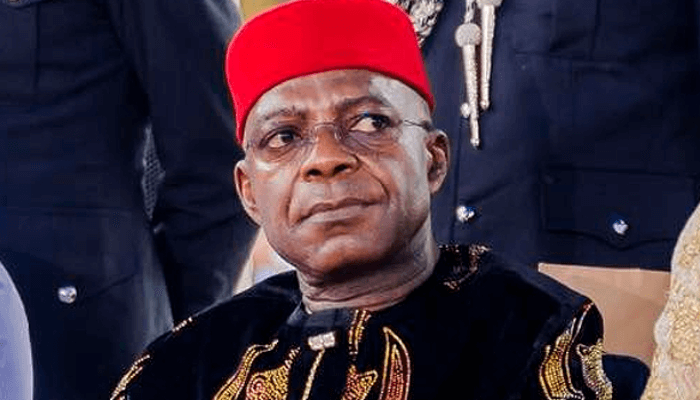

One of Governor Otti’s frequently touted economic mantra when he was in the opposition, with which he bamboozled Abians, was Velocity of Money. In addition to authoring numerous hyperbolic articles on economic subjects related to the state, he utilized every public platforms to critique the successive administrations in the state, arguing that they failed to adequately stimulate local economic growth through support for indigenous businesses. His criticism persisted despite his awareness of the parlous economic situation in Nigeria then, which had a ripple effect on the economies of the component units, Abia inclusive, which often left them insufficiently funded to cover even the salaries and emoluments of public sector employees. His criticisms were loaded with hard knocks, overlooking and or downplaying their modest efforts. He summarily dismissed them as people who did not mean well for the State.

Today, notwithstanding the substantial increase in revenue, the government and its minions are offering insultingly tenuous and outlandish justifications for the state’s poor performance in VAT collection, which ranked last among Nigerian states, with all the economically lowly-rated states and those ravaged by terrorism outperforming Abia state under the leadership of our first-class economist.

For clarity, VAT stands for Value-Added Tax, a type of consumption tax incorporated into the cost of products or services at every stage of production and distribution where value is added. Although businesses initially absorb this tax, they pass the total cost on to consumers via retail pricing.
Value-Added Tax (VAT) is levied in the following transaction chains:
*Production: When a business procures raw materials or services to manufacture a product, it incurs VAT on those inputs.
* Sale: Upon selling the finished product, the business collects VAT from the customer based on the final selling price.
*Remittance: Businesses calculate the difference between the VAT collected on sales and the VAT paid on purchases, remitting the net amount to the government.
in Nigeria, about 7.5% VAT is levied in the price of items, which the seller pays directly into a federal pool through the Federal Inland Revenue Service for sharing among federal, state, and local government.
The central thesis regarding the concept of Value-Added Tax (VAT) vis-a-vis Abia’s abysmally poor records is that it gauges the volume of economic activity in this state. This is where the failure of this government is evident.
VAT data serves as a robust and real-time indicator for tracking the purchasing power of a people in a given area/economy. This is attributable to VAT being a comprehensive tax directly linked to consumption, where fluctuations in VAT revenue collections accurately reflect the amount of money circulating within a specific economy. This underscores the place and or significance Velocity Of Money mantra previously touted and deployed by Dr. Alex Otti in his criticisms of the previous administrations’, particularly against the Ikpeazu’s administration.
Consequently, Abia’s current poor VAT record implies a shortage of money circulating in the state thus, severely limiting the purchasing power of Abians. The most straightforward interpretation of this phenomenon is that poverty is rife among Abians under the current administration, and the government bears responsibility due to its failure to inject sufficient funds into the state’s economy. Instructively, as substantial VAT revenue suggests citizens possess disposable income beyond basic necessities and are confident in their financial security, Abias poor VAT posting under governor Otti shows that Abians are dirt poor and on the breadlines.
And this raises a critical question: where is our money being expended?
Facts don’t lie! Objective data is unwavering, and mathematical statistics remains unaffected by social media rhetoric and exaggerated claims. Regardless of the methodology employed, the fundamental principles of arithmetic as is the case in every scientific study remain constant, exemplified by the fact that the equation 2+2 will equal 4 universally. Consequently, Value Added Tax (VAT) data is a veritable , reliable and undisputable indicator of a state’s financial health.
Furthermore, VAT serves as an effective tool for monitoring production volumes. Given its collection at every stage of the supply chain, a rise in VAT revenue typically signifies economic growth, reflected in increased manufacturing, production, trade, and service delivery within a given area. Conversely, a decline in VAT receipts suggests economic stagnation in the given area.
In light of the above, Abia’s poor VAT performance underscores the dire , perilous, precarious, parlous and ‘kwashiorkored’ state of its economy, indicating dismal growth in the state’s production and manufacturing sectors under Dr. Alex Otti’s administration.
Meanwhile, how far with the Star PaperMill and other production lines they told us they acquired for us? I digress though.
I briefly touched on certain fundamental aspects regarding the import and implications of VAT in a state’s economic life to underscore that Abia state, under Governor Alex Otti’s leadership, is moving backwards. If this administration channels investments into the state’s economy by prioritizing engagement of local contractors who will subsequently patronize local businesses in critical sectors such as building materials, it will facilitate better money circulation within the state, and results to increased consumer spending and higher VAT revenues for the federation. Conversely, if jobs and contracts, including those in the civil service and transport unions, are awarded to individuals and companies from outside Abia or who are not native to the state as we have in the New Abia, they will certainly repatriate and spend their earnings in their home states, thereby boosting the VAT revenues of other states while ours decline.
Money circulates and doesn’t stagnate; once injected into the state’s economy, it changes hands repeatedly. This circulation is what the then candidate Otti referred to as the velocity of money during the 2015 and 2019 political debates. The more money circulates, the more people spend, and the greater the VAT revenue; conversely, reduced circulation leads to decreased spending and lower VAT receipts.
Abians are not only good for voting; Abians should benefit from the resources of this state. The government should patronize Abians.
Politically , Supporters of the government in power should be made to feel the impact of being members of the ruling party by being given political appointments. This is one of the reasons they supported you. Government shouldn’t be about one man and his cronies while the rest of his party members are looking haggard and harassed by poverty, asking whether the man they voted for is the Messiah or whether they’re waiting for another Messiah. This is also another way money can injected in the system.
I have previously written about the grievances and disappointments expressed by traders in the timber, building, and industrial market in Umuahia, who wonder whether government still award contracts to local contractors. A group of building material vendors, with nostalgia , reminded that during the era of the famous and popular old Abia state, government mobilization of contractors was regular and typically stimulate market activity, but under the current administration, economic activity has stagnated, with virtually no local contractors patronizing their businesses. This phenomenon serves as another straightforward indicator for measuring local economic performance.
It is apposite to note that government expenditure anywhere in the world plays a significant role in stimulating economic activity. Government spending injects money into the economy, and its absence can lead to economic stagnation. This stark reality speaks volumes to the current economic situation in Abia.
The old Abia of #2b, #3b and #5b monthly allocations posted and maintained remarkable VAT records throughout their time. But the New Abia of #18b, #45b, #60b monthly receipt is lagging behind, seating at the bottom of the national VAT table. Shame!
Mr Ugochukwu Uwaeke, a public affairs analyst, writes from Abia State, Nigeria.
-
 Politics1 year ago
‘Bishop Onuoha, Iyke Nwoke luring ADC members into signing a document to suspend Abia chairman’-Okwara Agwu
-

 Politics1 year ago
Ex-State Assembly aspirant, Okoh, APC executive members join ADC in Abia
-

 Politics1 year ago
2027: Southeast chieftain, Daniel Ifeanyi Okorie dumps PRP for ADC in Abia
-

 Politics1 year ago
Abia ADC announces LG chairpersons for membership registration pending harmonization
-

 Politics1 year ago
Abia ADC disciplinary committee summons national welfare secretary, Ukandu over alleged misconducts
-

 News1 year ago
Ex-presidential aspirant, Onwusoanya Ezendigbo calls for legislations banning children of public office-holders to seek education, healthcare aboard
-

 Politics11 months ago
Abia chieftain, Emeka Bahadur tasks ADC members on grassroots mobilization
-

 Politics11 months ago
Stalwart, Emeka Bahadur welcomes ADC NWC to Abia on One-day leadership summit